


If you aren’t familiar with Walt Odets, who figures into the world of horology as the first serious writer covering the subject for a wide audience, please read my profile of him in the New York Times. Below I will remember the man who became my friend.
Walt and I first connected for an interview and, surprisingly, he wanted to stay in touch. We had a lot in common, but Walt, a psychologist who worked mostly with traumatized men, also seemed drawn to a sensitivity in me that most men (especially Baby Boomers) tend to shy away from, should they even notice it. I found Walt’s warmth unique and refreshing.
As friends, Walt and I didn’t talk about watches all that much. He was kind of over it by the time we met, and once we’d agreed that 36.5mm was the perfect watch size and that understated dress watches with noble mechanical solutions behind the dial were where it was at, there wasn’t that much left to say. I liked to get him worked up about gaudy modern Patek Philippe models just to hear his quips—”Oh my, that is truly disgusting.” or “That’s for someone who wants to let people know how rich they wish they were.”—but mostly we talked about other stuff.
One of our favorite topics was dogs. Walt had owned standard poodles over the years, and he was living without one toward the end of his life. This really bothered him, and he told me he thought about getting a puppy “roughly twice an hour.” He would have gone for a full-sized poodle again, and I would explain the merits of our small Havanese, who I could tell Walt felt were too small to achieve the canine regality he sought. His last poodle, Galileo, intuitively knew whether to provide Walt’s patients comfort during a session or to hide out in the next room, all based on the patient’s energy. Walt was a poodle man, through and through.

Coincidentally, we owned similar BMW motorcycles at the same time decades ago, and Walt would go on about the simplicity of those old boxer engines, how easy they were to work on, and how balanced they were on the road. Walt told me he attached a small engine to a bicycle as a kid, and I don’t doubt it was a fast machine. He started flying small planes as a young man. He raved about his Lexus SUV, saying it was the best driving car he’d ever owned, and Walt tried to convince me to buy the same model. I would explain that I was drawn to vintage Mercedes, and Walt would shrug and say, “Oh well…”, the implication being something like, “you’re hopeless.”
Though Walt never pried, it didn’t take long for me to share that I had developed an oddball masculinity in response to childhood traumas. Walt nodded, quietly affirmed what I was saying and usually dropped incisive comments informed by his lifetime of professionally caring for men. We toyed with the idea of him becoming my therapist and, because we were friends, decided against it. Nonetheless, some of his insights continue to help me.
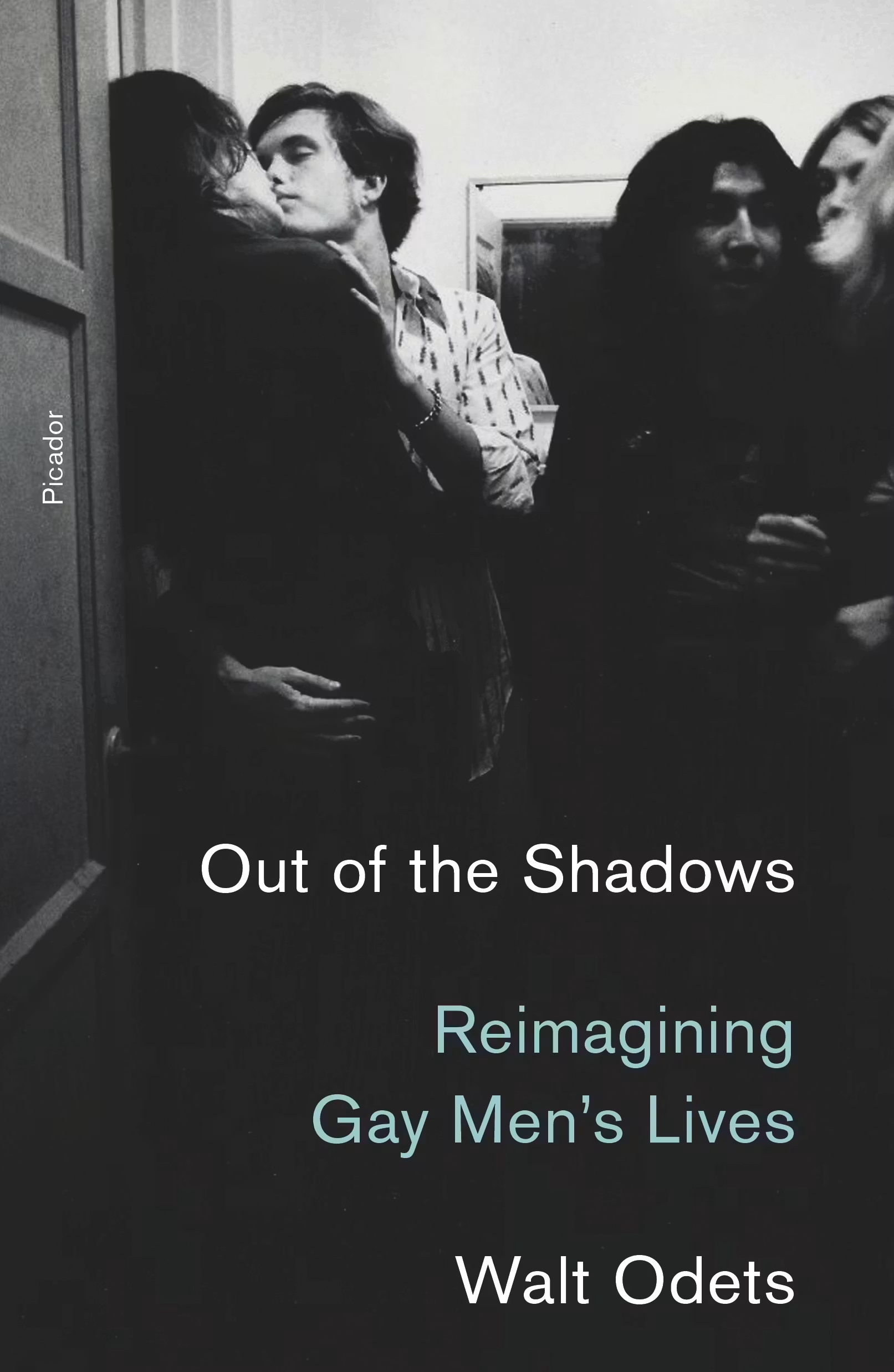
Once I’d read his books, and especially his second, Out of the Shadows: Reimagining Gay Men’s Lives, I understood more fully why Walt and I could click so easily and so personally. Walt’s framing of the problems gay men have faced over the past few generations also framed me with uncanny precision, despite my being straight. When I explained this to Walt, he told me that some of his most appreciative readers were women and straight men. That book is a masterwork, a unique fusion of memoir and psychology written in crystal-clear prose.
Walt’s father was the famous playwright Clifford Odets, and Walt’s family was generally connected to the most intelligent and talented people in America. When Walt showed interest in psychology, his aunt introduced him to Erik Erikson. Hollywood stars came in and out of Walt’s young life. One day, someone gave him a plane. Then an Omega watch. Over and over, I pictured Walt’s childhood as similar to that of J. D. Salinger‘s whiz-kid Seymour Glass, an East Coast Elite born and bred among Manhattan’s intelligentsia. But unlike Seymour Glass, Walt was bi-coastal, first transplanted to Hollywood’s hey-day and then San Francisco’s gay community at the peak of the AIDS crisis.
I think having lived through the worst of the AIDS crisis as a therapist, having lost the love of his life to AIDS, and then having dedicated so much of his time to AIDS advocacy (during the Regan administration, no less) would make a realist out of anyone. I wouldn’t characterize Walt as cynical, jaded or in any way hardened, but it did seem impossible to shock him. He struck me as resigned to humanity’s foibles, life’s difficulties, the inevitability of the blues, but Walt was also uncannily attuned to beauty and kindness. To come through those traumatic battles poised to serve others with gentle patience is a testament to Walt’s intelligence, his sense of purpose, his strength of character.
That he also basically invented watch journalism as we know it today and has yet to be surpassed at it…well, that just seems like a small footnote to an enormous and important life.
I was so fortunate to know him, and I will always cherish our connection.